
Menu
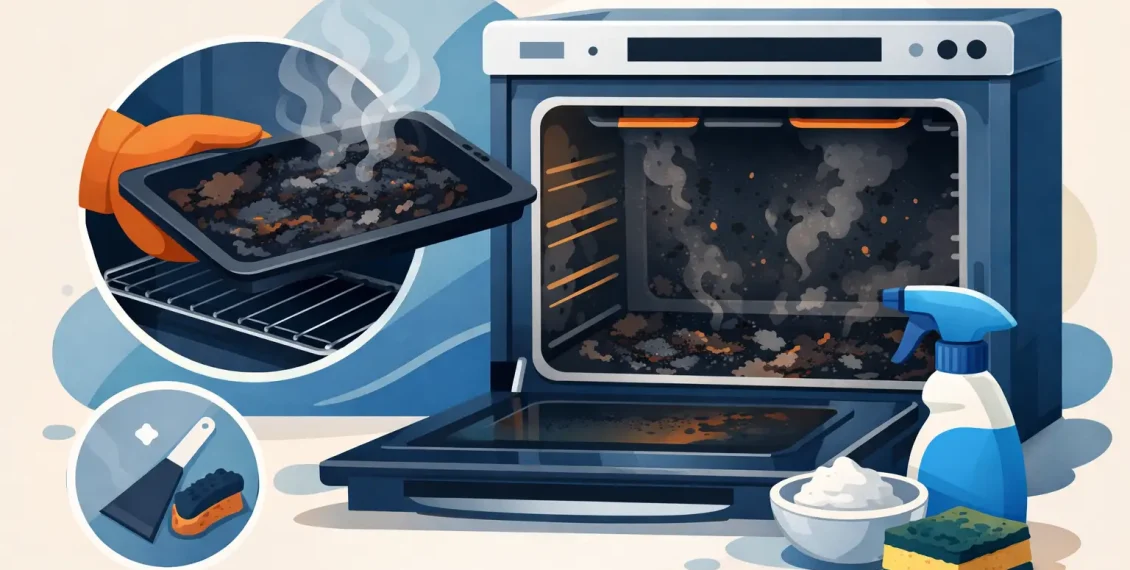
That black, stubborn crust on the roof, door and base of your cooker is not just a cosmetic issue. Burnt carbon inside oven surfaces can affect how your appliance looks, smells and performs, and the longer it is left, the harder it gets and the more difficult it is to shift. For many households, it starts with a small spill or a few months of heavy use and then turns into a baked-on layer that ordinary wiping simply will not touch.
If you are staring at an oven that smokes when it heats up or gives off that familiar burnt smell every time you cook, the problem is usually a build-up of grease, food residue and carbon build up. The good news is that it can be dealt with. The less welcome news is that the right approach depends on how much carbon has built up, what type of oven you own and how much risk you want to take with harsh chemicals or abrasive scrubbing.
Carbon build-up does not appear overnight. It forms when fats, oils, sauces and food particles are repeatedly exposed to high temperatures. And then allowed to cool down. Over time, those residues dehydrate, darken and harden into a dense layer that clings to enamel, glass and metal parts.
In a busy household, this happens quickly. Roasting trays bubble over, cheese drips from shelves, marinades spit onto the oven floor and forgotten crumbs sit through repeated cooking cycles. If the oven is wiped only occasionally, each use use of the oven makes the residue a little harder.
Range cookers, AGAs and other premium appliances can suffer just as badly as standard single ovens, and in some cases more so because they are used more often or have larger internal spaces. A premium cooker still needs expert care if you want to preserve the finish and keep it working at its best.
Many people put off dealing with carbon because the oven still appears to work. That is understandable, but heavy deposits can create practical issues. They can cause unpleasant smells, extra smoke and a generally unhygienic cooking environment. If burnt residue sits near heating elements or on the base of the oven, it may continue to char every time the appliance is switched on.
There is also the question of effort. Once carbon is fully baked on, supermarket sprays and a quick sponge-down rarely make much difference. People often end up spending hours scrubbing, only to get patchy results and scratched surfaces.
That is where a specialist approach matters. Different finishes and removable parts need different treatment, especially with enamel interiors, glass panels and higher-value cookers. The goal is not just to make the appliance look cleaner for a day, but to restore it safely and properly.
If the build-up is light to moderate, you may be able to improve matters yourself. Start by letting the oven cool fully and removing shelves, trays and any loose accessories. Dry debris can be brushed or vacuumed away gently before you tackle the baked-on residue.
A non-caustic oven cleaner or paste designed for baked-on grease is usually the safest starting point. Apply it according to the instructions and allow it enough dwell time. This is where many DIY attempts fail. People scrub too soon, when the product has not had time to soften the carbon.
Use non-scratch pads or soft cloths rather than anything metallic. It may take more than one round to loosen the deposit. Glass doors often respond better than enamel bases, but both need patience. If you attack the surface too aggressively, you can mark the finish and make future cleaning more difficult.
For removable racks and panels, soaking can help, but only if the material is suitable. Some components cope well with specialist dip-tank cleaning, while others should never be immersed or treated with strong products. It depends on the make, model and age of the appliance. For example some AEG ovens have teflon coated oven shelves which can be affected by harsh chemicals. Everhot cookers have aluminium racks in their stainless steel oven, again it doesn’t like harsh chemicals. Everhot cookers have powder coated front finishes and any harsh chemicals could easily remove the finish and mean a large repair bill.
There is a point where a home clean stops being practical. If the carbon is thick, widespread or years old, the job can quickly become messy, frustrating and disappointing. Strong retail chemicals may leave lingering fumes in the kitchen, while sharp scrapers and harsh pads can damage liners, seals and door glass.
Self-cleaning functions are not always the simple answer either. Pyrolytic cycles can reduce some residue to ash, but they do not suit every oven or every level of grime, and they do not remove grease from every part; for example doors are cleaned properly in the cycle, and you have the added hassle of having to remove and refit the side racks and shelves yourself. If your oven already smokes heavily, using a high-heat cleaning cycle can make the problem feel worse before it gets better.
The same applies to premium cookers. AGAs, Everhots and range cookers often need a more careful process because of their construction, surfaces and removable components. A one-size-fits-all cleaner from the supermarket is not specialist care.
A proper specialist clean is about more than spraying and wiping. The most effective results usually come from a full strip-down process, where racks, panels and removable parts are taken out and treated separately, while the interior is cleaned by hand with methods suitable for the appliance.
This is especially useful when carbon has built up in corners, around fan areas, on shelf runners and between glass door panels. Those are the places household cleaning often misses. They are also the areas that make the biggest difference when restored properly.
A fume-free, eco-friendly process is worth looking for, particularly in homes with children, pets or anyone sensitive to strong odours. The right service should leave the oven ready to use, without the harsh chemical smell that can hang around after some DIY products.
For homeowners who want visible transformation without sacrificing a Saturday to scrubbing, specialist cleaning is often the sensible option. It saves time, reduces the risk of damage and usually achieves a finish that is far closer to as-new.
That depends on how you cook. A household using the oven daily for roasts, tray bakes and family meals will naturally build up residue faster than someone who uses it once or twice a week. Spills should be wiped up as soon as the appliance is cool enough, but real life does not always allow for that.
As a rule, light maintenance between deeper cleans helps prevent carbon from taking hold. If you notice smoke, persistent burnt smells, dark splatters on the oven roof or a sticky film that no longer wipes away, the build-up is already becoming established.
Many households benefit from a regular professional oven clean every six to twelve months. Heavy users may need more frequent attention, especially if they own larger or more complex appliances. It is easier and more cost-effective to maintain an oven than to rescue one that has been neglected for years.
A few simple habits make a real difference. Use trays or liners approved for your model when cooking messy dishes, avoid overfilling roasting tins and wipe fresh splashes once the oven has cooled. Keeping shelves and trays cleaner also reduces the chance of old grease smoking and spreading residue around the cavity. We use oven liners in the enamel trays we use to cook in our AGA; the liners can be put into the dishwasher afterwards and the trays need just a rinse off with soapy water.
It also helps to be realistic. No oven stays pristine if it is used properly. The aim is not perfection after every meal. It is keeping on top of the mess before it carbonises into something far tougher.
If your appliance is already past that stage, forcing a DIY solution can become false economy. A specialist oven cleaning service such as OvenGleamers is designed for exactly this sort of problem – restoring ovens, range cookers and premium appliances to a much higher standard, with the reassurance of an easy booking process, local availability and a 100% satisfaction guarantee.
A clean oven should not smoke, smell tired or let down the rest of your kitchen. If burnt carbon has taken over, the right fix is the one that restores the appliance safely and properly, so you can get back to cooking without the grime fighting back.
Graham Rogers founded OvenGleamers in Taunton in 2004, growing it from a one-man van to a five-van operation within three years. The first franchise launched in 2010, and today OvenGleamers is a growing national network, recognised as experts in cleaning Everhot, AGA, and large cookers. Graham also blogs, creates videos, and hosts a podcast. Outside of business, he enjoys weight training, has owned AGAs for nearly 30 years, and holds two Open University degrees.
Heavily Soiled Oven Cleaning Example Explained
Ward Robertson Review Reply
Strip Down or Self Clean Oven: Which Is Best?
Best Ways to Maintain an AGA Properly at Home
How to Clean Cooker Hood Mesh Without the Mess
Oven Cleaning for Landlords Between Tenancies
Best Non Toxic Cooker Cleaning Process at Home
Can Professional Cleaning Remove Carbon Buildup?
