
Menu
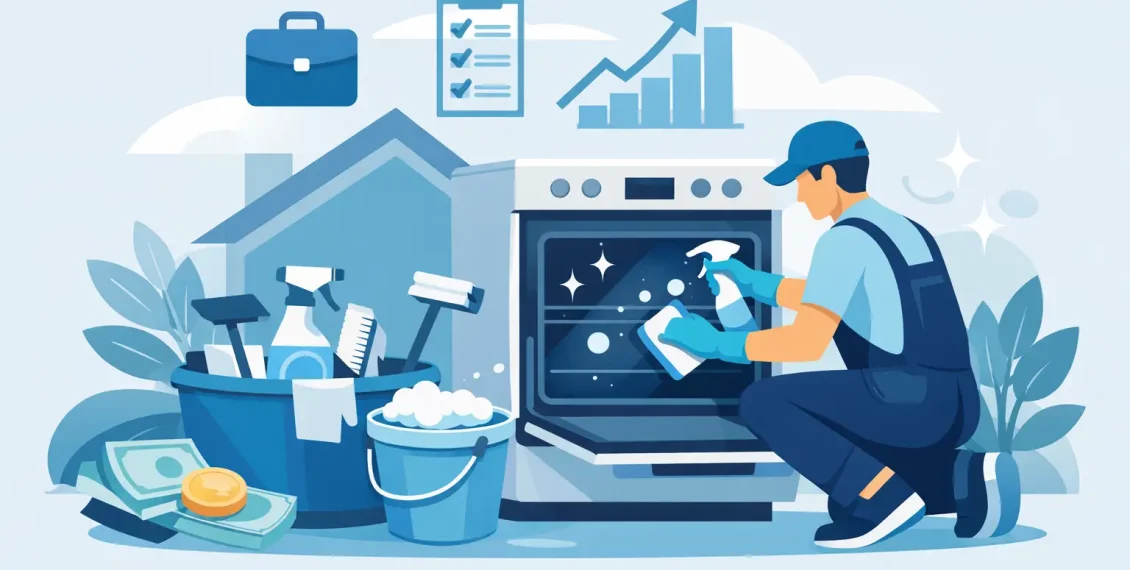
If you want to start an oven cleaning business, the quickest way to go wrong is to think it is just another domestic cleaning service. It is not. Customers are inviting you into their kitchen to work on one of the most used and most expensive appliances in the home. They expect a specialist, not someone with a bucket, a sponge and a guesswork price.
That is what makes this a strong business opportunity in the UK. Demand is steady, the results are visible, and word of mouth travels fast when an oven, range cooker or AGA is brought back to a genuine gleam. But the same point cuts both ways. If your process is poor, your booking system is unreliable or your finish is inconsistent, customers notice immediately.
This is a service people put off doing themselves for months, sometimes years. Modern households are busy, rental properties need preparing between tenants, and many homeowners now own premium appliances that they do not want to damage with harsh chemicals or the wrong tools. A proper oven clean is messy, time-consuming and far more technical than it looks.
That creates a useful gap in the market. Customers are usually not shopping for the cheapest possible option. They want someone reliable, insured, easy to book and able to clean safely without filling the house with fumes. If you can offer that with a professional standard of finish, you are selling convenience and reassurance as much as cleaning time.
There is also repeat demand built into the model. A family oven may need cleaning every six to twelve months. Landlords and letting agents can bring recurring work. Owners of range cookers, AGAs and Everhots often prefer a specialist they trust and stick with them.
To start an oven cleaning business properly, you need to think beyond the clean itself. The job includes quoting accurately, turning up on time, protecting the customer’s kitchen, dismantling removable parts safely, cleaning without damage, reassembling correctly and leaving the home tidy.
In practical terms, this is a service business with an operational core. The quality of your day will depend on route planning, booking efficiency, stock control and how consistently you deliver the same standard across every appointment. That may sound unglamorous, but it is where profitable local service businesses are built.
The strongest operators are not simply good at cleaning. They are good at process. They know how long a single oven takes, how to price a range cooker, when to allow extra time for neglected appliances and how to manage customer expectations before they arrive.
You do not need a huge premises or an expensive shop front, but you do need the right kit from day one. That includes a reliable vehicle, dip tank setup or equivalent cleaning system for removable parts, protective sheets, specialist tools, gloves, scraping and polishing equipment, and cleaning products suited to different surfaces and finishes.
This is one area where cutting corners usually costs more later. Cheap tools slow you down. Poor-quality products can leave residue, scratches or odours. Worse still, using the wrong method on enamel, glass, stainless steel or the seals around premium appliances can create customer complaints that wipe out the profit from several jobs.
Training matters for the same reason. A standard built around full strip-down cleaning, safe handling and fume-free or low-odour methods gives customers confidence and makes your results more consistent. It also helps when you move beyond basic single ovens into hobs, extractors, BBQs and larger cookers. Premium appliances are profitable, but only if you know how to treat them properly.
One of the easiest mistakes when you start an oven cleaning business is underpricing to win early jobs. It feels sensible at first. In reality, it often leaves you working long hours for thin margins, especially once travel, chemicals, insurance, fuel and re-cleans are factored in.
A better approach is to build pricing around appliance type, size, condition and time. A single oven is not the same as a double oven. A lightly used hob is not the same as a heavily soiled range cooker. AGAs and similar appliances need specialist understanding and should be priced accordingly.
Customers respond well to clear, inclusive quotes. They do not want surprises at the door. If racks, trays and doors are included, say so. If there are extra charges for exceptional condition or additional appliances, make that clear when booking. Transparent pricing builds trust and reduces awkward conversations in the kitchen.
At the beginning, this business is won street by street and postcode by postcode. People usually look for someone nearby, someone established and someone who appears to specialise. That means your local presence matters more than broad, vague marketing.
Your branding should make it obvious what you do. Your van, workwear and booking messages should all say specialist oven cleaning, not general cleaning. Customers are more likely to book when they feel they are dealing with a focused service that does this work every day.
Before-and-after photography is especially powerful in this trade because the transformation is easy to understand. So are reviews. Prospective customers want reassurance that you will respect their home, arrive when promised and deliver a finish worth paying for. If your first customers are happy, ask for feedback promptly while the result is still fresh in their mind.
Repeat business is just as important as new leads. A polite reminder six or nine months later can bring customers back without the cost of finding someone new. This is where an organised diary and customer records start earning their keep.
This depends on your budget, experience and appetite for building systems yourself. Starting independently gives you full control over pricing, branding and expansion. If you already understand service operations and local marketing, that can work well.
The trade-off is that you must create everything yourself. That means training, supplier relationships, booking processes, customer service standards, marketing materials and the local trust that comes from a recognised name. It can be done, but it usually takes longer and the early mistakes are yours to absorb.
A franchise model can suit people who want a clearer route in. With the right operator, you gain a proven process, established branding, central support and a service standard customers already recognise. For a specialist category like oven cleaning, that support can make a real difference, especially when handling premium appliances and customer expectations.
For some, independence is the right fit. For others, joining a known specialist network such as OvenGleamers offers a faster path to credibility and more operational backing from the outset. The right answer depends on whether you most value control or structure.
The cleaning itself may be the visible part of the job, but the paperwork protects the business. You will need insurance, a clear complaints procedure, proper records and a sensible quoting process. If you employ staff later, health and safety responsibilities increase again.
You also need to think carefully about scheduling. Overbook and your standards slip. Underbook and the business struggles to grow. The sweet spot is a diary that allows enough time for each job while still making efficient use of travel time. Reliable service is part of the product.
Professional communication counts too. A missed call, vague text message or late arrival can lose a booking before you have even opened your toolkit. Customers want easy booking, straightforward confirmation and confidence that the person arriving knows exactly what they are doing.
The long-term winners in this market tend to do three things well. They specialise, they standardise and they stay visible locally. Specialising helps you command better prices and build trust. Standardising gives customers the same high standard every time. Staying visible keeps the diary full without relying on last-minute discounts.
As you grow, you may choose to widen the service carefully into hobs, extractors, microwaves, BBQs and premium cookers. That can raise order values and make each booking more profitable. The key word is carefully. Expansion only works when the extra service still meets the same standard your reputation is built on.
There is real satisfaction in this trade because the results are immediate. Customers see the difference at once. They often tell friends, book again and remember the company that brought their appliance back to life. If you approach it as a specialist service rather than a side hustle, there is every chance to build something dependable, local and genuinely valued.
Start with the standard you want your name to stand for, and let every booking prove it.
Heavily Soiled Oven Cleaning Example Explained
Ward Robertson Review Reply
Strip Down or Self Clean Oven: Which Is Best?
Best Ways to Maintain an AGA Properly at Home
How to Clean Cooker Hood Mesh Without the Mess
Oven Cleaning for Landlords Between Tenancies
Best Non Toxic Cooker Cleaning Process at Home
Can Professional Cleaning Remove Carbon Buildup?
