
Menu
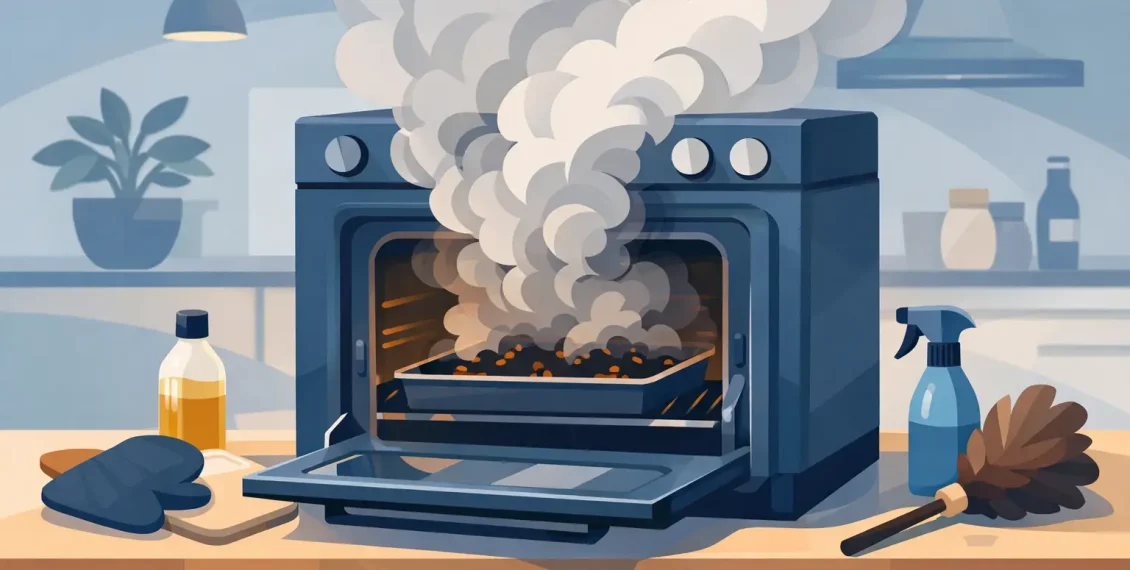
You switch the oven on, to start cooking, and within seconds there is smoke drifting across the kitchen. If you are asking why does my oven smoke? The answer is usually far more straightforward than people think. In most cases, smoke comes from burnt-on food, spilled grease, cleaning residue, or a part of the oven heating up with old deposits still inside. The key is working out whether it is a one-off issue or a sign your oven needs proper attention.
The most common reason is you switch on the grill and it starts smoking. Most people will switch the grill straight off again as they are worried that a fire may be starting. On the grill its usually a build of grease that is causing it to smoke. Just a small bit of carbon will cause enough smoke to make you worried. But a small spec of carbon will burn off if you turn on the grill and let it burn off. It will take a few seconds. Other reasons ovens smoke are from leftover residue from previous cooking. Fat spatters, cheese, marinades, crumbs and sugary drips can settle on the oven floor, door, shelves or around the fan area. The next time the appliance heats up, those deposits burn and create smoke.
For us as a professional oven cleaner the most obvious cause of a smoking oven is pool of grease at the bottom of the oven.
What catches a lot of people out is the oven may have look reasonably clean at a glance. But a light film of grease is enough to smoke once temperatures climb, especially during roasting or when using the grill. Premium cookers, range cookers and AGAs and Everhots are no exception but its normally a seal issue with the traditional cookers. On range cookers with larger cooking cavities it means more places for carbon to hide and build-up than a standard single oven.
If the smoke appears within the first few minutes, that points strongly to residue already in the oven. If it starts later, once food has been cooking for a while, the problem may be a fresh spill, a tray overflowing, or grease splashing during cooking.
Though the reasons an AGA or an Everhot may smoke from the ovens is normally because the door seals need replacing.
Burnt food debris is the biggest culprit, but not the only one. A single drop of oil on the base can produce more smoke than you would expect, and layers of old grease around internal panels can keep smoking every time you cook.
A recent clean can also be part of the problem. If any cleaning product has been left behind inside the oven, it may burn off when heated. That can create smoke and an unpleasant chemical smell. This is one reason harsh DIY oven cleaning can backfire if residue is not fully removed.
We have had numerous reports of customers using their ovens for the first time after a ‘professional oven clean’ by some of our competitors and their kitchens filling with smoke and this has frightened them. This is caused by a rushed clean where product residue has been left in the oven and this is what burns off on first use of the oven after the clean. With OvenGleamers we use an Eco paste and no residue is left inside the oven.
New ovens sometimes smoke too. Manufacturers often apply protective coatings or leave residues from production, and these can burn away during the first few uses. That is usually temporary, though you should still check the manual for first-use guidance.
There are also cooking-related causes. Food placed too close to the top element can char quickly under the grill. A roasting tin packed too full can bubble over. High-fat foods such as sausages, lamb or chicken with skin can release enough grease to smoke if the oven interior is already dirty.
A small amount of smoke after a spill is not unusual. The same goes for a brand-new oven during its first run or two. In those cases, the smoke should be limited and should not continue for weeks.
What is not normal is frequent smoking from an oven that is in regular use, especially if it happens every time you heat it. Thick smoke, strong burning smells, or smoke paired with poor cooking performance suggest the appliance needs more than a quick wipe.
If the smoke smells chemical rather than like burnt food, think about recent cleaning products or protective coatings. If it smells acrid and electrical, stop using the oven and seek professional advice. That type of smell is less likely to be simple grease build-up and more likely to indicate a fault.
This is a common frustration. You clean the visible areas, switch the oven on, and it still smokes. Usually, that means the source was not fully removed. And usually because the grill hasn’t been heated up during the clean to burn off deposits on the grill element.
Grease can sit behind panels, around the fan, on the roof of the oven, inside the door, or on the racks and rack supports. These are the areas many people cannot reach properly with standard household cleaning. Some residue also becomes carbonised over time, so it does not lift easily with sprays and scrubbing.
Another possibility is cleaning product residue. If too much product was used, or if it was not thoroughly rinsed away, the oven can smoke as the remaining chemicals heat up. Self-cleaning attempts with caustic products can make this worse, particularly in enclosed spaces or on specialist finishes.
This is where a professional strip-down clean makes a real difference. When removable parts are taken out and cleaned properly, it becomes much easier to deal with hidden grease and burnt-on deposits rather than just the areas in plain sight.
Start with the simple things. Look at the oven floor for drips and burnt patches. Check whether a tray, foil or baking paper is touching an element. Inspect the shelves and side supports for baked-on grease. If you have recently cooked something likely to splatter, that is your first clue.
Next, think about timing. Did the smoking begin after a roast dinner, a bubbling pie, or an attempted deep clean? Did it start only after using the grill? Patterns matter. They often tell you whether the issue is old residue, a fresh spill or something more technical.
It also helps to check the door seal and ventilation area. A damaged seal will not usually cause smoke on its own, but it can make heat escape unevenly and worsen burning. Likewise, blocked vents can contribute to unpleasant smells and poor performance.
If the cause is food or grease residue, the answer is thorough cleaning, not simply turning the temperature down and hoping for the best. Start by letting the oven cool fully. Remove shelves, trays and any loose debris. Clean obvious spills from the base and interior surfaces.
Be careful with shop-bought oven cleaners. Some are aggressive, and not every oven finish or component responds well to them – Read the instructions thoroughly. For premium cookers, range cookers, AGAs and Everhots, the wrong method can create more problems than it solves. It depends on the make, the finish and where the residue is sitting.
If the smoke is light and clearly linked to a small recent spill, you may get away with a careful clean and a short empty run afterwards. Open the windows, ventilate the room and keep an eye on it. If the smoke persists, the build-up is probably deeper than a surface wipe can tackle.
For heavily used ovens, especially those that have not had a proper deep clean in some time, professional cleaning is often the quickest and least messy route. A specialist service can remove stubborn carbon deposits, clean dismantled parts, and restore the oven to a standard that helps prevent recurring smoke.
Not every smoking oven is dirty. If smoke appears alongside sparks, tripping electrics, unusual noises, or an element that glows oddly bright in one area, stop using the appliance. The same applies if you notice a burning plastic or electrical smell.
Fan ovens can sometimes collect residue around the fan cover, but they can also develop faults that affect airflow and heating. An overheating element or wiring issue needs an engineer, not a cleaning product. Petrol ovens bring their own considerations too. If anything seems off with ignition, flame behaviour or petrol smell, do not keep testing it.
The easiest rule is this: if the smoke smells like burnt food, cleaning is the likely answer. If it smells chemical or electrical, treat it more seriously.
A smoky oven is usually the result of small messes being left to build up. Cleaning spills early makes a big difference. So does using trays deep enough to catch bubbling dishes and avoiding overfilling roasting tins.
Regular maintenance matters more than occasional heroic scrubbing sessions. A lightly used oven may only need periodic attention, while a busy family cooker or a large range can build up residue quickly. There is no single schedule that suits everyone. It depends on how often you cook, what you cook, and how much splatter your usual meals create.
If your oven is used hard, a professional oven clean from a specialist such as OvenGleamers can help keep smoke, smells and grease build-up under control without harsh fumes or hours of DIY effort. For many households, that peace of mind is worth it, especially with higher-value appliances where finish and function both matter.
Higher temperatures do not create the mess, but they do expose it. Residue that sits quietly at 160C may start smoking at 200C or under the grill. That is why some people only notice the problem when cooking pizzas, roasting meat or crisping dishes at the end.
Grease is especially sensitive to this. Once it reaches its smoke point, the kitchen fills up quickly. So if your oven seems fine for gentle baking but smokes during hotter cooking, that still points to contamination inside rather than the temperature itself being wrong.
A smoking oven is rarely mysterious. More often, it is telling you that old spills, grease or cleaning residue are still there and being reheated every time you cook. Sort the cause properly, and your oven should go back to doing what it is meant to do – heat your food, not the whole kitchen.
Graham Rogers founded OvenGleamers in Taunton in 2004, growing it from a one-man van to a five-van operation within three years. The first franchise launched in 2010, and today OvenGleamers is a growing national network, recognised as experts in cleaning Everhot, AGA, and large cookers. Graham also blogs, creates videos, and hosts a podcast. Outside of business, he enjoys weight training, has owned AGAs for nearly 30 years, and holds two Open University degrees.
Self Cleaning Oven Versus Manual: Which Wins?
Heavily Soiled Oven Cleaning Example Explained
Ward Robertson Review Reply
Strip Down or Self Clean Oven: Which Is Best?
Best Ways to Maintain an AGA Properly at Home
How to Clean Cooker Hood Mesh Without the Mess
Oven Cleaning for Landlords Between Tenancies
Best Non Toxic Cooker Cleaning Process at Home
