
Menu
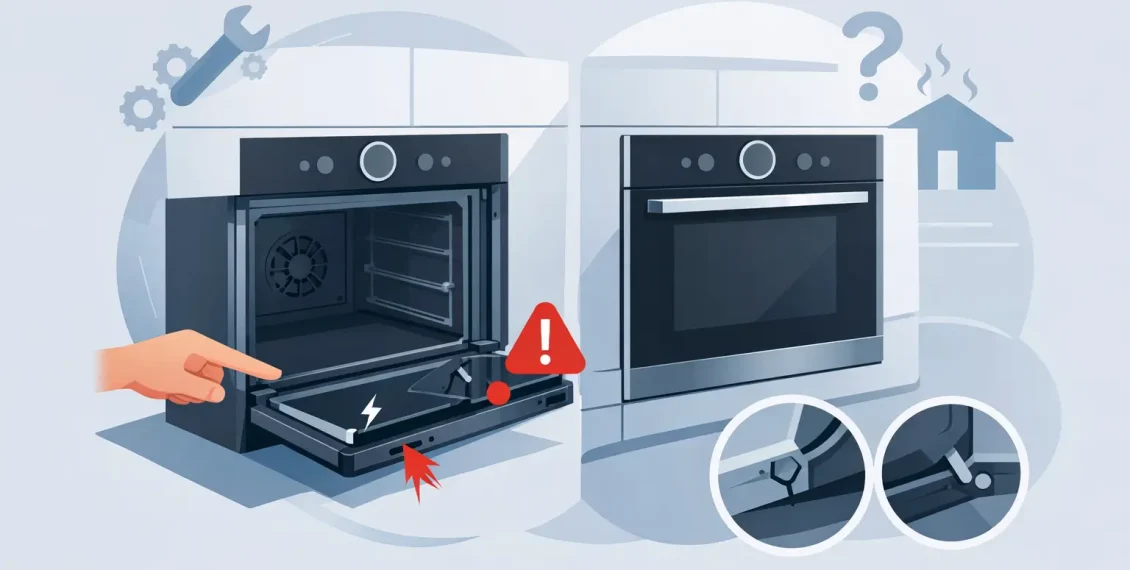
If your oven door no longer tucks away as neatly as it used to, you are not imagining it. Neff hide and slide problems usually start small – a door that feels heavier, a movement that is not quite smooth, or a bit of resistance when opening and closing. Left alone, those early signs can turn into a door that sticks, drops, rattles or simply stops behaving as designed.
That matters for more than convenience. A Hide and Slide door is a clever bit of engineering, and when it is not moving properly it can affect day-to-day cooking, cleaning access and, in some cases, how securely the oven closes. For busy households, it is one of those faults that quickly shifts from mildly annoying to something you want sorted.
Most issues come down to one of three things – build-up, wear, or misalignment. The sliding door system relies on moving parts working together in the right sequence. If grease and carbon start gathering around the runners, hinges or internal track areas, movement can become stiff or uneven. A premium oven may be built to a high standard, but it still has to cope with heat, spills and repeated use.
Wear is the next common factor. Over time, hinges, springs, rollers and guide components can lose tension or drift out of their ideal position. That does not always mean a dramatic breakage. Sometimes the door still works, but it feels wrong. You may notice a scraping sound, a slight tilt, or a door that no longer glides in one smooth motion.
Then there is alignment. If the door has been knocked, handled roughly, or refitted imperfectly after cleaning or repair, the whole mechanism can feel out of sync. With a standard drop-down oven door, a small issue may be easier to ignore. With a Hide and Slide design, even a slight misalignment tends to make itself known quite quickly.
One of the most frequent complaints is stiffness. The door may resist when you try to slide it underneath, or it may need a firmer push than before. In many cases, that points to grease build-up or early wear in the moving parts. The key detail is whether the resistance is consistent or sudden. Consistent heaviness often suggests gradual build-up. A sudden change can point to damage or a shifted component.
Another common issue is a door that does not close properly. If the seal is not sitting snugly, heat can escape and cooking performance may suffer. You might notice longer cooking times, uneven browning or more heat around the front of the appliance. Sometimes the problem is not the door itself, but the mechanism failing to return it to the correct final position.
Noise is another clue. A well-functioning Hide and Slide door should feel controlled and fairly quiet. Grinding, clicking or metallic rubbing usually means something is not moving cleanly. That could be debris in the track, worn fittings or tension problems in the hinge area.
Some owners also find the door appears lopsided or drops slightly as it opens. That is not a fault to brush aside. A door carrying weight unevenly puts extra strain on the mechanism and may worsen quickly with continued use.
It is easy to think of an oven door issue as purely mechanical, but heavy soiling is often involved. Grease does not stay neatly on trays and shelves. Over time it can spread into corners, around seals, near hinge points and into the less visible parts of the door assembly. Once it bakes on, it becomes sticky and abrasive at the same time.
That is why Neff hide and slide problems sometimes show up after months of putting off a deep clean. The door may still technically work, but the extra drag starts affecting how it feels. In a family kitchen where the oven is used most days, this can creep up sooner than people expect.
There is a trade-off here. A quick wipe-down helps with surface dirt, but it does not reach the areas where hidden build-up can interfere with movement. On the other hand, taking things apart without knowing the mechanism can create a bigger problem than the original one.
Start with the obvious. Look for visible grease deposits around the front edge, door seal area and accessible runner sections. If the door movement has become rough, check whether there are crumbs, burnt-on residue or sticky patches affecting the track.
Pay attention to how the door behaves through the whole movement. Does it start smoothly and then catch? Does it slide in but struggle to come back out? Does one side look lower than the other? Those details help separate a cleaning-related issue from a mechanical one.
You should also inspect the seal and general door fit. If the oven is losing heat or the door does not sit flush, the mechanism may not be returning the door into position correctly. A soft cloth and careful external cleaning are sensible. Forcing stiff parts, applying the wrong lubricant or trying to bend fittings back into line is not.
If your model allows parts to be removed for cleaning, always follow the manufacturer guidance exactly. Hide and Slide doors are more specialised than a standard oven door, so a method that works on a basic cooker is not automatically safe here.
If the issue is caused by grease, carbon and general build-up, a professional deep clean can make a real difference. A proper strip-down clean restores access to the areas ordinary household cleaning misses, which can improve movement and help you spot whether there is also wear underneath the dirt.
This is especially useful when the door has become stiff rather than completely failed. In many cases, cleaning removes the grime that is creating drag and lets the mechanism move more freely again. It also helps preserve the finish of a premium appliance without harsh DIY methods.
But it is worth being clear – cleaning is not a fix for broken components. If a hinge, runner or spring has worn out or shifted significantly, the appliance may need repair rather than cleaning alone. The sensible approach is to treat cleaning as part of good maintenance and early problem-solving, not as a cure for every fault.
That is where specialist knowledge matters. On higher-value ovens, a careful pair of hands is far better than trial and error. A professional who works regularly with premium appliances will usually recognise whether the problem looks like heavy soiling, mechanical wear, or a combination of both.
The best prevention is consistency. That does not mean scrubbing your oven every weekend. It means dealing with spills before they bake on, keeping the door area clean, and not waiting until the mechanism feels noticeably strained.
Gentle handling makes a difference too. The Hide and Slide design is built for regular use, but it still benefits from being opened and closed with control rather than shoved. If the movement changes, do not keep forcing it in the hope it will sort itself out.
A periodic specialist clean is often the most practical option for busy households. It saves time, protects the appliance and reduces the chance of hidden grime building up around parts you cannot easily reach. For many owners, that is less about appearance alone and more about keeping a premium oven working as it should.
If the door is dropping, visibly misaligned, failing to close properly, or making sharp grinding noises, it is time to get it looked at. The same applies if the oven is losing heat or the mechanism feels unpredictable. Small faults in a door system rarely improve through use. More often, they become more expensive and more inconvenient.
For homeowners who want the oven restored to the highest standard without mess, fumes or guesswork, specialist support is the safer route. A thorough clean can reveal what is dirt and what is genuine wear, and that clarity is often half the battle. At OvenGleamers, that practical, careful approach is exactly what customers value.
A Hide and Slide oven is designed to make cooking easier, not to become another job on your list. If the door no longer feels right, acting early usually gives you the best chance of keeping it smooth, safe and satisfying to use.
Self Cleaning Oven Versus Manual: Which Wins?
Heavily Soiled Oven Cleaning Example Explained
Ward Robertson Review Reply
Strip Down or Self Clean Oven: Which Is Best?
Best Ways to Maintain an AGA Properly at Home
How to Clean Cooker Hood Mesh Without the Mess
Oven Cleaning for Landlords Between Tenancies
Best Non Toxic Cooker Cleaning Process at Home
